Tenure Track, African Roots: How Universities Are Finally Giving Balafon and Kora Masters a Permanent Seat at the Table
For a long time, if you wanted to learn the balafon or kora at an American university, your best shot was catching a visiting artist for a two-day residency — maybe a workshop, maybe a demo performance, and then they were gone. The knowledge passed through like a weather system. Powerful, but temporary.
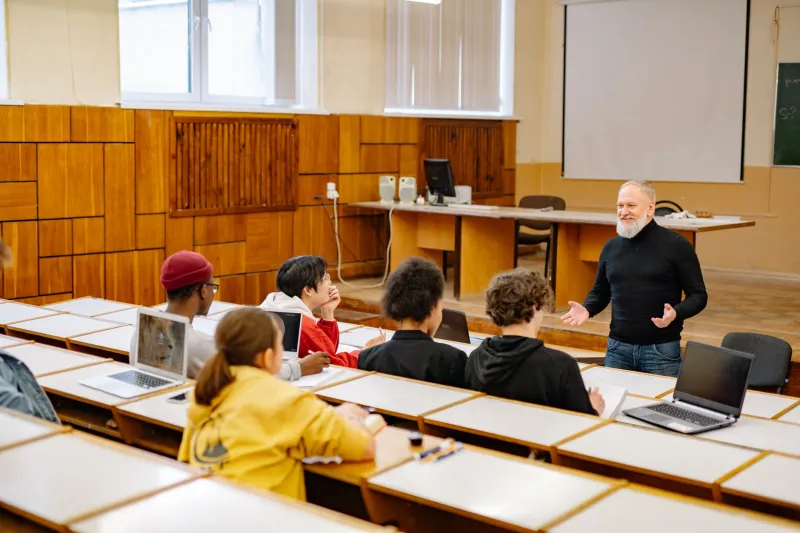
That's starting to change in a serious way. Music schools and liberal arts colleges from New England to the Pacific Coast are quietly — and in some cases, very publicly — hiring West African instrument specialists as permanent faculty. Not adjuncts. Not rotating guests. Full professors with offices, course loads, and a real say in how their departments operate.
It's a shift that's been a long time coming, and depending on who you ask, it's either a welcome correction or a full-on restructuring of what American music education thinks it's for.
The Guest Lecture Ceiling
Talk to any working balafon or kora master who's spent time in American academia, and you'll hear a version of the same story. They get invited in. Students love them. Faculty are impressed. And then the semester ends, the honorarium check clears, and the institution moves on without them.
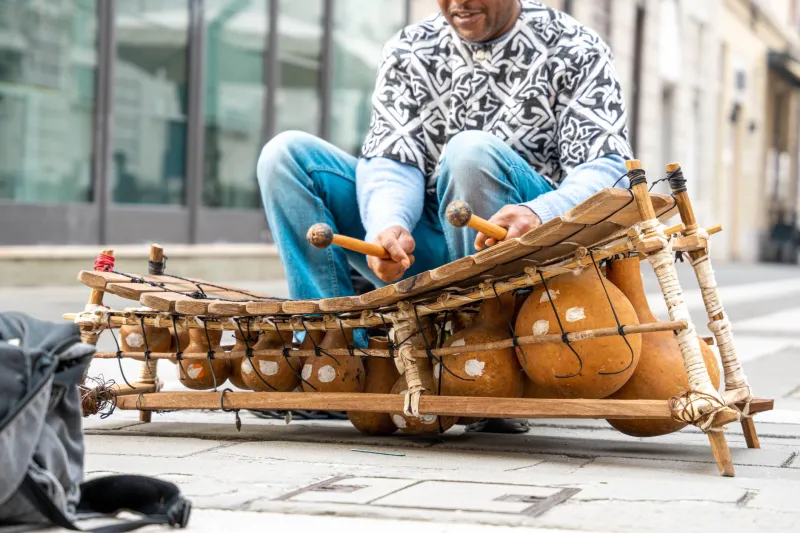
That model wasn't just unfair to the musicians — it was educationally shallow. A two-day residency can spark curiosity, but it can't build fluency. It can't transmit the kind of layered, generational knowledge that these instruments carry. The balafon, for instance, isn't just a percussion instrument you can decode in forty-eight hours. Its tuning systems, its regional variations, its role in ceremony and storytelling — that's a curriculum unto itself.
Universities are starting to reckon with that gap. And some of them are responding by doing what they should have done decades ago: making room at the faculty table.
Who's Getting Hired — and Where
The trend is showing up across different types of institutions, which is part of what makes it notable. It's not just the big research universities with deep pockets and ethnomusicology departments that have been doing this work for years. Smaller liberal arts colleges, regional state schools, and conservatory-adjacent programs are also making moves.
In some cases, the hires are coming through ethnomusicology or world music programs. In others, they're landing in performance departments — which is the more meaningful shift, because performance departments are where the prestige and the resources tend to live. When a kora master gets hired alongside the violin faculty rather than tucked into a cultural studies corner, that says something different about institutional priorities.
What's driving it? A few things are converging at once. There's growing student demand — Gen Z musicians are genuinely curious about non-Western musical traditions, and they're asking for training that reflects that curiosity. There's also increasing pressure from accreditation bodies and diversity initiatives pushing departments to examine whose knowledge they're centering. And honestly, there's a recognition that the classical Western conservatory model has a ceiling, and a lot of the most interesting music being made right now is happening in the spaces that model can't fully explain.
What Changes When the Specialist Stays
Having a balafon or kora master on permanent faculty doesn't just mean students can take a semester-long course instead of attending a one-off workshop. It reshapes the whole ecosystem of a music program in ways that compound over time.
Curriculum gets redesigned. When a faculty member has genuine institutional standing, they can advocate for their subject area to be integrated into core requirements rather than treated as an elective curiosity. Ear training through African polyrhythmic frameworks. Music theory courses that don't assume Western notation is the only valid system. Ensemble structures that reflect communal, call-and-response traditions rather than the conductor-led hierarchy of the orchestra.
Student career pathways open up, too. A decade ago, there wasn't much of a road map for an American musician who wanted to build a serious practice around West African instruments. Now, with more programs offering real training and more faculty who can write credible recommendation letters and connect students to professional networks, that's changing. Graduate students are starting to see viable academic careers in this space — which means the next generation of faculty hires is already in the pipeline.
And perhaps most importantly, the instruments themselves get treated differently. When a balafon master is a tenured professor, the balafon is no longer an artifact to be studied from a respectful distance. It's a living instrument with a living tradition, taught by someone who holds that tradition in their hands.
The Pushback Is Real
None of this is happening without friction. There are music faculty — particularly in performance departments built around the European classical canon — who see these hires as a dilution of standards, or who question whether the institutional frameworks around tenure and peer review can meaningfully evaluate expertise that doesn't fit Western academic categories.
Those are real tensions, and they don't resolve easily. How do you assess a kora master's scholarship when their knowledge was transmitted orally across generations and their performance practice doesn't map neatly onto Western notation? These are questions that universities are genuinely wrestling with, and the answers being developed right now will shape how the field evolves.
There's also a concern — voiced more quietly, but present — about tokenism. Hiring one African instrument specialist and calling the job done isn't transformation. It's optics. The institutions that are doing this thoughtfully are the ones building out full course sequences, investing in instrument collections, funding student travel and collaboration, and creating the conditions for these hires to actually thrive rather than burn out navigating hostile department cultures alone.
A New Map for Music Education
What's emerging, slowly but unmistakably, is a different picture of what a music education in America can look like. One where the balafon sits in the same room as the piano. Where a student can build a serious, rigorous, career-ready practice rooted in West African musical tradition — not as an exotic supplement to their "real" training, but as the center of it.
For listeners and fans tuned into the broader world of African and global music, this feels like a natural extension of what's been happening in studios, on streaming platforms, and on stages for years. The sounds have been crossing borders and reshaping popular music for a long time. The academies are just catching up.
At Radio Balafon, we've been watching these instruments earn their place in every corner of American cultural life. Seeing them earn a permanent home in higher education might be the most consequential development yet. Because when the next generation of musicians learns the balafon not as a novelty but as a foundation, the music that comes out the other side is going to sound like something genuinely new.