From Circle Time to Concert Hall: The Balafon Is Quietly Transforming How America Teaches Music
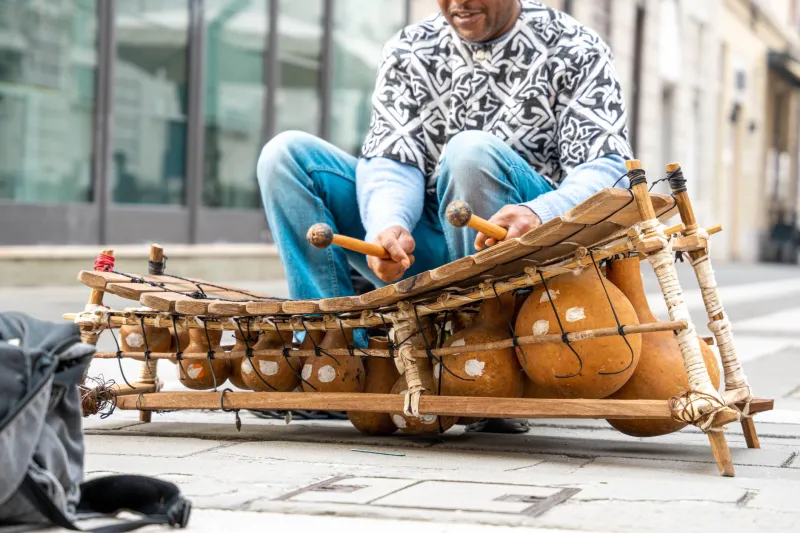
Walk into Maplewood Elementary School in Portland, Oregon on a Tuesday afternoon and you might hear something that stops you in your tracks. It's not a recorder squeaking through "Hot Cross Buns." It's not a beginner violinist fighting with their bow hold. It's the warm, woody resonance of a balafon — West Africa's calabash-resonated wooden xylophone — ringing out across a third-grade classroom while twenty-two eight-year-olds beam like they just discovered electricity.
This is not an isolated experiment. From public schools in Atlanta to music conservatories in Boston, educators are weaving the balafon into curricula in ways that are changing not just what students play, but how they think about music itself.
Why the Balafon, and Why Now?
The timing isn't random. American music education has been wrestling with a long-overdue reckoning about whose traditions get centered in the classroom. For most of the 20th century, Western European classical music sat at the top of the hierarchy almost by default — piano, violin, orchestral theory. Everything else was elective, supplementary, or frankly invisible.
But that framework has been cracking for a while, and the balafon has become one of the most compelling tools educators are using to pry it open further.
"There's something about the instrument's accessibility that just breaks down walls immediately," says Denise Okafor, a general music teacher at a public school in Columbus, Ohio who introduced balafons to her K-5 program three years ago. "Kids don't walk in thinking they can't play it. There's no prior baggage. No one's mom told them balafon lessons were something to be embarrassed about."
That psychological openness matters more than it might seem. Research in music pedagogy has consistently shown that early encounters with unfamiliar instruments — particularly those from non-Western traditions — can expand a child's ear in ways that benefit their overall musicianship for years. The balafon, with its pentatonic scales and intuitive mallet technique, turns out to be a surprisingly forgiving first instrument while still offering genuine depth for advanced players.
The Classroom Case for African Percussion
Ask curriculum developers why they're reaching for the balafon specifically, and a few themes come up again and again.
First, there's the rhythmic complexity. West African musical traditions are built on interlocking polyrhythmic patterns that challenge the brain in ways that straight 4/4 time simply doesn't. Educators who've integrated balafon into their programs report that students develop a far more sophisticated sense of timing, and that this transfers directly to their work with Western instruments.
"My students who've spent even one semester working with African percussion play with better rhythmic feel than students who haven't," says Marcus Tillman, who teaches music theory at a performing arts high school in Chicago. "They internalize rhythm as something that lives in the body, not just on a page."
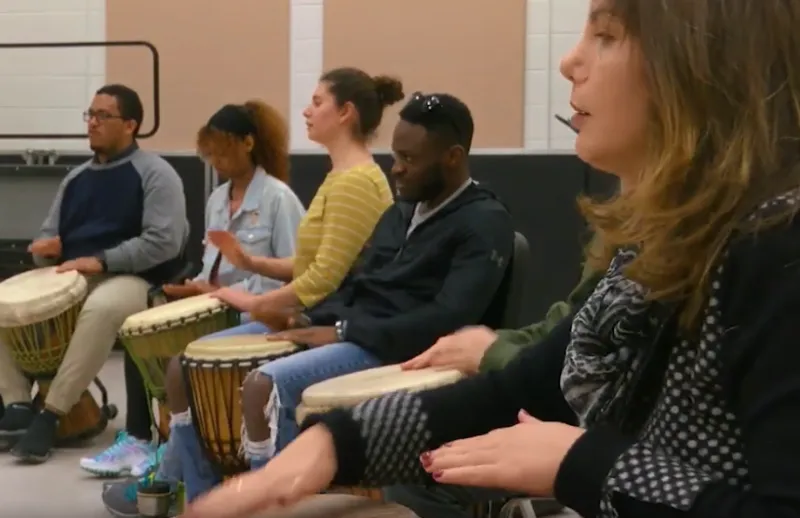
Second, there's the collaborative dimension. Traditional balafon music — whether from Guinea, Mali, Burkina Faso, or elsewhere across West and Central Africa — is inherently ensemble-based. You learn to lock in with other players, to listen actively, to hold your part while someone else carries the melody. These are skills that chamber music tries to teach, but the balafon gets there faster and with less friction for younger students.
Third — and this is the part that gets music educators genuinely excited — the instrument opens up conversations about culture, history, and the global reach of music that a piano lesson simply can't.
"We talk about where the balafon comes from, which means we talk about the Mande people, about griot traditions, about how music has always carried knowledge and community," says Okafor. "And then we talk about how those traditions traveled, how they influenced jazz, blues, even hip-hop. Suddenly the whole map of American music looks different to these kids."
Conservatories Are Paying Attention
It's not just elementary schools making moves. At the university level, several prominent music programs have begun offering balafon instruction as part of broader world music initiatives, and the reception has surprised even the faculty who championed them.
At a New England conservatory that recently added an African music ensemble to its curriculum, enrollment exceeded expectations within the first semester. Students who'd spent years in classical training described the experience of learning the balafon as genuinely humbling — and genuinely liberating.
"I've been playing piano since I was four," one junior student told us. "I thought I understood rhythm. The balafon showed me how much I was still thinking about it from the outside instead of feeling it from the inside. It rewired something."
That kind of rewiring is exactly what progressive music educators have been arguing for. The case isn't that Western classical training is without value — it's that treating it as the only legitimate foundation leaves students with a fundamentally incomplete picture of what music is and where it comes from.
The Resistance (Because There Always Is Some)
Not everyone is on board, and it would be dishonest to pretend the transition has been frictionless. Some school districts have pushed back on curriculum changes, citing budget constraints — quality balafons aren't cheap, and training teachers to play and teach them adds another layer of investment. There are also ongoing conversations, sometimes heated ones, about who should be doing the teaching.
The question of cultural authority is real and worth taking seriously. A number of educators and community advocates have pointed out that bringing West African instruments into American classrooms without bringing in West African teachers, or at minimum consulting deeply with those communities, risks reproducing the same extractive dynamic that has historically plagued world music programs. The instrument becomes a prop rather than a portal.
The educators doing this work most thoughtfully are the ones who've built relationships — with Guinean and Malian musicians based in the US, with diaspora community organizations, with cultural institutions that can provide context and connection. It takes more effort, but the results are measurably richer.
"If you're just teaching kids to hit the keys without teaching them what the keys mean, you've missed the whole point," says Tillman. "The balafon isn't just a sound-making object. It's a living tradition. That has to come through."
What This Looks Like Going Forward
The momentum is real and it's building. Organizations like the Association for Cultural Equity and various African arts nonprofits have been developing teacher training resources specifically around balafon pedagogy. Online platforms are making it easier for educators in places without direct access to West African communities to find guidance and curriculum support.
And the students themselves — kindergartners banging out their first pentatonic phrases, conservatory juniors having their rhythmic assumptions upended — are part of a generation that may grow up with a fundamentally different understanding of where music comes from and who it belongs to.
That's not a small thing. Music education has always been about more than scales and technique. At its best, it's about teaching people to hear the world differently. The balafon, it turns out, is very good at that.
And somewhere in a third-grade classroom in Portland, twenty-two kids are proving it every Tuesday afternoon.