Whose Classroom Is It Anyway? The Fight Over Who Gets to Teach African Music in America
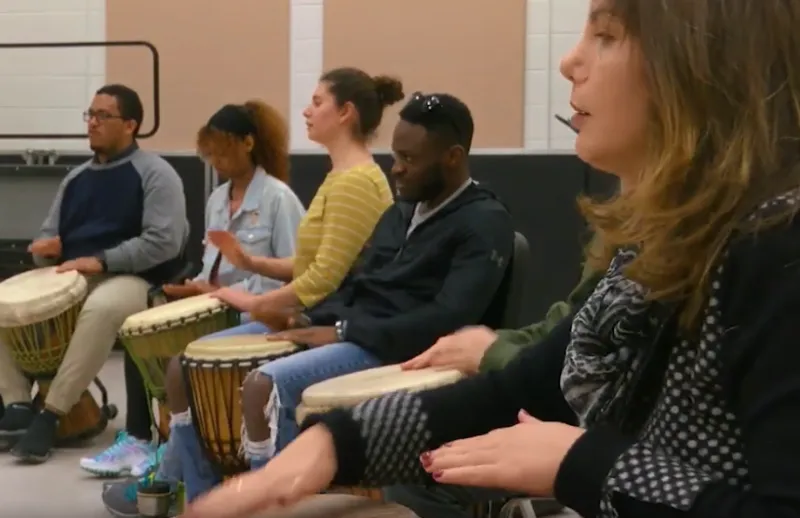
Photo: diverse classroom African music drumming lesson cultural education, via s19499.pcdn.co
Imagine spending your childhood learning to play the djembe from your grandfather in Conakry, absorbing not just the technique but the ceremonies, the stories, the specific social weight each rhythm carries. Then you move to the United States, build a teaching practice, and watch a YouTube video of a music professor at a midwestern university — who learned the instrument from a workshop in 2019 — confidently explaining those same rhythms to a lecture hall full of students.
That's not a hypothetical. Variations of that scenario are playing out constantly, and they're generating real friction in spaces where African music intersects with American education.
The Landscape Has Changed Fast
Five years ago, opportunities to learn about African music traditions in the US were limited — a handful of university ethnomusicology programs, community workshops run by immigrant musicians, and whatever you could piece together online. Today, the picture looks completely different. Udemy courses on West African drumming. YouTube channels with hundreds of thousands of subscribers teaching kora and mbira. University world music programs that have expanded their African content significantly. Podcast series breaking down the history of Afrobeats, Highlife, and Mande griot traditions for general audiences.
This expansion is, in many ways, genuinely good. African music deserves more space in American cultural education, and barriers to that knowledge are worth removing. The problem, as many African musicians and educators see it, isn't that the knowledge is spreading — it's who's doing the spreading, and what gets left out in translation.
The Gatekeeping Argument
Musicians who grew up inside these traditions are often the sharpest critics of how their music gets taught when it moves through Western institutional channels. The concern isn't usually about technical accuracy, though that's sometimes an issue. It's about context — the parts of the tradition that don't fit neatly into a 90-minute lecture or a 12-module online course.
West African musical traditions, for instance, are often inseparable from social function. Certain rhythms belong to specific ceremonies. Some knowledge is meant to be transmitted in particular ways, between particular people, at particular times. When that knowledge gets flattened into content — democratized, packaged, and sold — something real is lost, even if the notes are correct.
For African musicians trying to build sustainable teaching careers in the US, there's also a straightforward economic dimension. When a well-funded university department or a savvy online educator can offer African music education at scale, it can undercut the market for the very people who carry authentic knowledge. The person with the deepest expertise doesn't always win in an attention economy.
The Open Access Counterargument
The other side of this debate has its own legitimate points, and they're worth taking seriously rather than dismissing.
Knowledge gatekeeping has a complicated history in Western academia — one that has often been used to keep marginalized communities out of institutions, not to protect them. Applying a gatekeeping framework to African music, even with good intentions, risks recreating those same dynamics in reverse. Who decides who has sufficient cultural credentials to teach? Those decisions tend to favor people with institutional backing, which in America often means people with existing advantages.
There's also a genuine argument that broader exposure — even imperfect, simplified exposure — creates more pathways to the real thing. Someone who gets curious about Malian music from a YouTube video might eventually seek out a Malian musician to study with seriously. The entry point matters less than what it leads to.
And for many African artists, reaching American audiences at scale requires working with American platforms and institutions, imperfect as they are. Refusing to engage with Western educational infrastructure entirely can mean ceding that space to people with less knowledge and less care.
The Middle Ground Nobody Agrees On
Most people in this conversation say they want the same thing: African music taught well, with respect for its origins, in ways that benefit the communities that created it. The disagreement is about how to get there.
One model that gets traction is collaborative curriculum development — Western institutions partnering directly with African musicians and scholars to build educational content, with meaningful compensation and credit flowing back to the source. This sounds reasonable in theory. In practice, it requires institutions to genuinely share authority rather than just adding a consultant credit, which is harder than it sounds.
Another approach focuses on amplifying African-led educational platforms directly — supporting the YouTube channels, podcast networks, and online schools run by musicians from these traditions rather than routing everything through Western intermediaries. Radio Balafon's own approach has always leaned this direction: creating space for African artists to tell their own stories, in their own voices, to audiences who are genuinely curious.
Certification is a murkier conversation. Some practitioners argue for formal credentialing systems that require students to demonstrate cultural knowledge, not just technical skill. Others see this as bureaucratic gatekeeping that would freeze traditions in place rather than letting them evolve.
What Gets Lost in the Loudest Arguments
Something that tends to get buried when this debate gets heated: African music is not a monolith. There are thousands of distinct musical traditions across the continent, each with its own rules about transmission, its own relationship to sacred and secular space, its own community of practitioners with their own views on all of this.
Treating "African music education" as a single policy question flattens that complexity in the same way that treating Africa as a single culture does. The appropriate framework for teaching Ewe drumming from Ghana might look very different from the appropriate framework for teaching mbaqanga from South Africa. Lumping them together in order to have a cleaner argument doesn't serve anyone.
The Real Question
At the core of this debate is a question that doesn't have a clean answer: in a globalized, digitally connected world, can musical traditions be protected without being calcified? Can they spread without being diluted?
The honest answer is probably that it depends — on who's doing the teaching, what their relationship to the tradition is, how much they're compensating the communities they learned from, and whether they're creating pathways to deeper engagement or offering a substitute for it.
What's clear is that this conversation needs the voices of African musicians and educators at its center, not its margins. The debate over who should teach African music in America is, at its heart, a debate about who gets to define cultural value — and that's too important to leave to people who showed up to the party late.