Stage Left, Talking Drum: How American Orchestras Are Finally Making Room for African Instruments
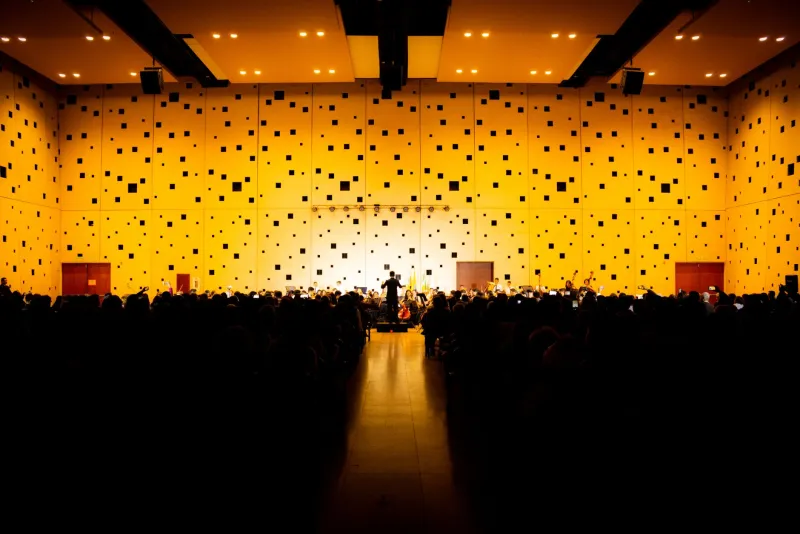
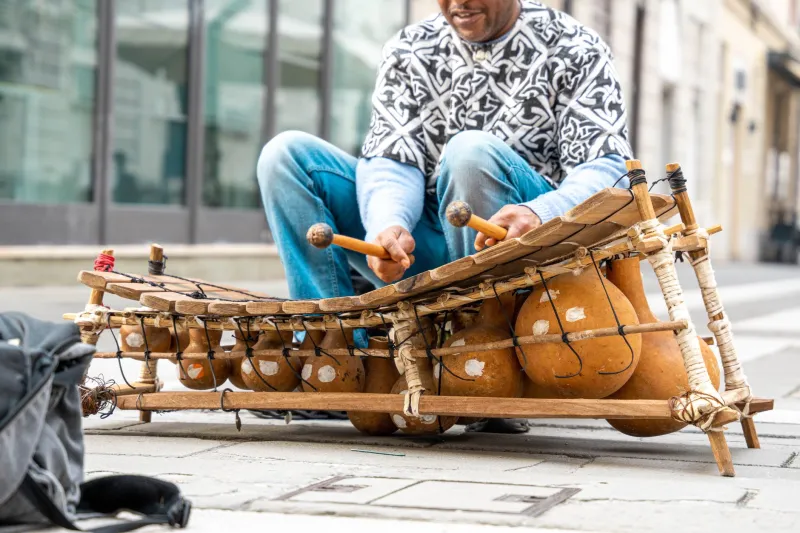
There's a moment in a recent Chicago Symphony Orchestra rehearsal that cellist Dana Okonkwo still talks about. The ensemble was working through a newly commissioned piece by Ghanaian-American composer Nii Tettey Tetteh, and midway through the second movement, a balafon player seated near the front of the stage launched into a cascading phrase that locked so naturally with the string section that several musicians stopped playing just to listen. "It wasn't a novelty," Okonkwo says. "It felt like the instrument had always belonged there."
That feeling — part revelation, part inevitability — is becoming more common in American concert halls. After decades of confining African instruments to one-off world music nights or educational outreach programs, a growing number of major orchestras are folding the balafon, talking drum, kora, and mbira into their core seasonal programming. It's a shift that's been building slowly, and it's now hitting a kind of critical mass.
Beyond the Festival Ghetto
For years, African music in the classical context meant a special event. Maybe a February concert timed to Black History Month, or a summer festival partnership with a local African arts organization. The instruments showed up, the audiences showed up, and then everyone went back to Brahms.
That model, while well-intentioned, had a ceiling — and a lot of musicians and administrators knew it. "When you program something as a cultural event, you're implicitly saying it doesn't belong in the regular season," says Marcus Bellamy, a conductor who has worked with both the Detroit Symphony Orchestra and several West African ensembles. "You're celebrating it from a distance."
The push to move beyond that distance has come from multiple directions at once. Composers are writing new works that demand African instruments as essential voices rather than exotic color. Musicians trained in both Western and African traditions are joining orchestral rosters and advocating from the inside. And audiences — particularly younger, more diverse ones that orchestras desperately want to cultivate — are signaling that they want programming that reflects the actual breadth of the world's musical heritage.
What It Actually Takes
The logistical challenges of integrating instruments like the balafon into a standard orchestral context are real, and anyone working in this space will tell you not to underestimate them.
The balafon, a wooden-keyed xylophone native to West Africa with gourd resonators underneath each key, doesn't have a standardized tuning system the way a concert piano does. Different regional traditions tune the instrument differently, which means composers writing for balafon and orchestra have to make deliberate choices about how the two sound worlds will coexist. Some composers lean into the tension, treating the slight tonal differences as a feature. Others work closely with specific balafon makers to produce instruments tuned to Western equal temperament.
"It's not a problem — it's a conversation," says composer and percussionist Awa Diabaté, who has written for multiple American ensembles. "The balafon has its own logic. The orchestra has its own logic. Finding where those two things meet is where the interesting music lives."
There are also training gaps to address. Most orchestral percussionists come up through conservatory programs that give them extensive exposure to marimba and xylophone but almost none to the balafon or talking drum. A few forward-thinking music schools have started changing that, but for now, many orchestras are bringing in specialist players from outside the ensemble when African instruments are required — which raises its own questions about how deeply integrated these instruments really are.
The Institutional Reckoning
For orchestral institutions, the shift involves more than just swapping out instruments. It requires reconsidering whose musical traditions are treated as foundational and whose are treated as supplemental.
The American symphony orchestra as an institution was built around a European canon, and that canon doesn't just reflect a set of aesthetic preferences — it reflects a set of cultural priorities that took centuries to calcify. Cracking it open means dealing with resistance from some quarters, even as enthusiasm builds in others.
"There are board members and longtime subscribers who get nervous when you start talking about changing the repertoire too dramatically," acknowledges one orchestra executive director who asked not to be named. "But there are also a lot of people who've been waiting for this. The question is whether the institution is willing to move at the speed the moment requires."
Some orchestras are moving faster than others. The Los Angeles Philharmonic, which has long positioned itself as a leader in new music and cultural inclusion, has commissioned multiple works featuring African instruments in recent seasons. The Philadelphia Orchestra has deepened its partnerships with African music organizations in ways that go beyond performance to include co-commissioning and educational programming. Smaller regional orchestras in cities with significant African diaspora communities — Atlanta, Houston, Minneapolis — are finding that African instrument integration resonates strongly with local audiences.
The Composers Driving the Change
If there's a single engine powering this shift, it's the generation of composers who grew up moving fluidly between African and Western musical traditions and who are now getting major commissions.
These aren't composers who learned about the balafon from a textbook. Many of them grew up hearing it at family gatherings, or studied it alongside Western instruments from childhood, or spent years living and working in West Africa before bringing that knowledge back to American concert stages. Their work doesn't treat African instruments as guests in a Western house — it treats the whole musical conversation as shared territory.
"I'm not trying to translate African music into orchestral language," says one young composer whose work has been performed by three major American orchestras in the past two years. "I'm trying to write music that doesn't need translation — music where both things are just true at the same time."
What the Audience Hears
Audiences, it turns out, are often ahead of the institutions. Post-concert surveys and anecdotal feedback from orchestras that have programmed African instruments suggest that listeners respond to these works with genuine enthusiasm — not just appreciation for the novelty, but a sense of emotional connection that transcends cultural familiarity.
There's something about the balafon in particular that seems to reach people quickly. Its warm, resonant tone sits in a register that feels immediately accessible, and its rhythmic language — rooted in the kind of interlocking polyrhythmic patterns that Radio Balafon listeners know well — has an energy that translates powerfully in a live concert hall setting.
When that energy meets the full weight of a symphony orchestra, something genuinely new happens. It's not fusion in the diluted, compromised sense the word sometimes implies. It's more like a conversation that both parties have been waiting a long time to have.
The concert hall, for all its history, might just be ready to listen.