Ancient Rhythms, Modern Breakthroughs: How West African Musicians Are Reshaping Innovation Culture in the Valley
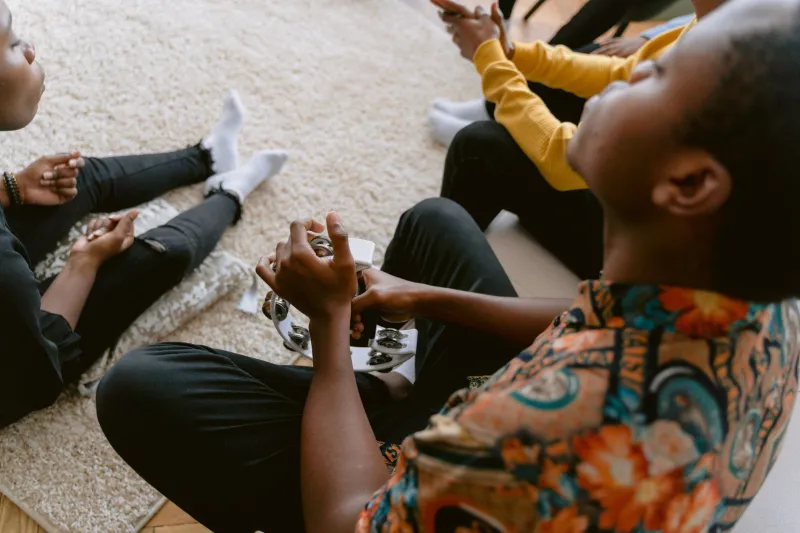
Somewhere between a design sprint and a product roadmap, a software company's leadership team sat in a circle around a Guinean musician named Mamady Kouyaté. He wasn't there to perform. He was there to teach them how to listen.
This is happening more than you might think. Across the Bay Area and beyond, a quiet but accelerating trend has taken hold inside some of the most data-obsessed companies on earth: they're hiring West African musicians — balafon players, kora masters, djembe instructors — as creative consultants. Not as novelty. Not as team-building entertainment. As genuine intellectual partners in the work of innovation.
And the results, by multiple accounts, are genuinely surprising.
Why Music? Why Now?
The short answer is that Silicon Valley has a creativity problem it hasn't been able to engineer its way out of. Post-pandemic burnout, homogenized thinking inside monocultures, and the increasing pressure to build AI tools that somehow feel human — these forces have pushed HR directors and innovation leads to look outside their usual playbook.
Design thinking workshops, improv comedy classes, meditation retreats — the Valley has tried all of it. But something about African musical traditions is landing differently. The reasons go deeper than novelty.
"Western music, especially in professional settings, tends to be hierarchical," explains Dr. Amara Diallo, an ethnomusicologist at UC Berkeley who has consulted on several of these corporate engagements. "There's a conductor. There are soloists. There's a score that tells everyone exactly what to do. West African ensemble music doesn't work that way. Every player is responsible for the whole. You can't hide behind your part."
That structural difference turns out to map pretty cleanly onto the kinds of collaborative failures tech companies keep running into.
The Balafon in the Boardroom
The balafon — the ancient West African xylophone with gourd resonators beneath its wooden keys — has emerged as a particular favorite in these engagements. Partly because of its accessibility (you don't need years of training to make something that sounds intentional), and partly because of what it demands from a group.
Kouyaté, who grew up in Conakry and has been based in the Bay Area for over a decade, runs what he calls "rhythmic collaboration intensives" for corporate clients. He charges a premium — "comparable to a senior executive coach," he says, without giving specifics — and has a waitlist.
"When I put a balafon in front of a VP of engineering, they immediately want to control it," he says, laughing. "They want to know the rules. They want to master it fast. And I have to show them: in this tradition, mastery isn't about control. It's about response. You listen more than you play."
That lesson — that true collaboration requires more listening than leading — sounds simple. But watching it click in real time for people who have spent careers being rewarded for dominance and speed is, by all accounts, something else.
What the Case Studies Actually Show
We spoke with three tech companies that have run these programs in the last two years. None wanted to be named publicly (a few are in competitive product cycles, and one said frankly that they didn't want the program to become a hiring signal), but the patterns they described were consistent.
One mid-sized SaaS company in San Francisco brought in a Malian musician and balafon master for a three-day offsite with their product leadership team. The stated goal was to break a months-long deadlock on a product architecture decision that had fractured the team into camps.
"By the end of day one, we weren't talking about the product at all," said the company's Chief Product Officer. "We were just playing. And failing. Together. And laughing about it. Something shifted in the room that we hadn't been able to manufacture in six months of standups."
The architecture decision got made on day three. The CPO credits the process — not any specific insight from the musician — with creating the psychological safety to actually hear each other.
A second company, a hardware startup in San Jose, used a series of monthly sessions with a Senegalese percussionist to redesign how their cross-functional teams ran creative reviews. They adapted the call-and-response structure of traditional West African drumming into their feedback process — one person introduces an idea, others respond in turn, no one speaks over anyone else, the "rhythm" of the conversation is held collectively.
"It sounds almost too simple," their Head of Design told us. "But it completely changed the quality of feedback we were giving each other. People stopped performing. They started actually responding."
The Musicians' Perspective
It would be easy — and wrong — to frame this purely as a story about what Silicon Valley is extracting from African tradition. The musicians involved have their own read on what's happening.
Kouyaté is direct about the transactional reality: "I am paid well. I set the terms. I decide what I share and what I protect." He's careful to distinguish between what he offers in corporate settings — broadly applicable principles of ensemble listening and collective rhythm — and the sacred or ceremonial dimensions of his tradition that he keeps entirely separate from this work.
"These companies are not learning my culture," he says. "They are learning from a principle that my culture holds. That's a different thing. I'm a consultant, not an exhibit."
That distinction matters, and it's one the more thoughtful practitioners in this space hold firmly. The risk of these engagements sliding into cultural tourism is real, and the musicians who are doing this work well are the ones who define the boundaries clearly from the start.
Beyond the Trend Cycle
It's fair to ask whether this is a lasting shift or a premium version of the drum circle phase that corporate America went through in the early 2000s. The people closest to it think it's different — but they'd say that, wouldn't they?
What does seem genuinely new is the level at which these engagements are happening. This isn't HR offering an optional Friday afternoon activity. These are C-suite offsites. Innovation lab partnerships. Ongoing retainer relationships.
And the musicians involved aren't treating it as a side gig. Kouyaté has turned down clients he felt weren't approaching the work seriously. Others have started developing formal curricula, working with organizational psychologists to document what's actually transferring and why.
Whether the Valley's appetite for this kind of thinking outlasts its current moment of existential anxiety about AI and creativity is an open question. But for now, the balafon is in the room — and the people who built the world's most powerful technology platforms are, for once, the ones being asked to follow the beat instead of set it.
That alone feels worth paying attention to.